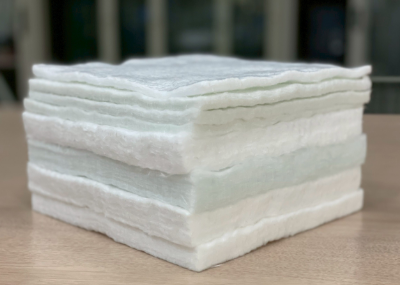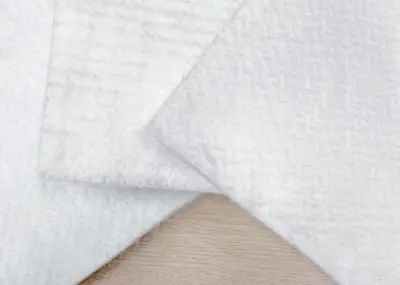
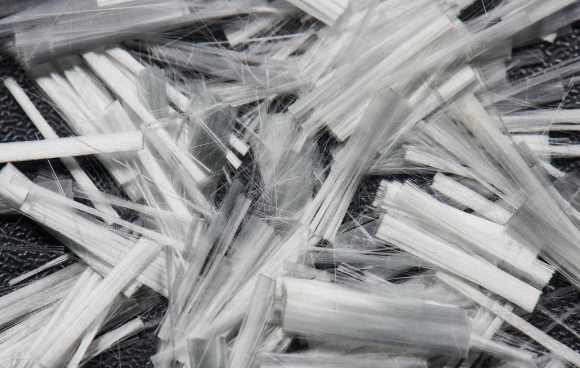


Base Material for Aerogel Blanket (-30°C to +1000°C)

The upper limit of aerogel blanket quality depends on the substrate before impregnation. Lifengjing supplies two main types of aerogel substrates: pure inorganic fiber needled blankets (-30°C to +1000°C), and glass fiber mixed with synthetic fiber needled substrates (such as glass fiber mixed with PET, suitable for medium and low temperature product lines, -30°C to +250°C). Both share the same uniformity specifications, with thickness and weight per unit area controlled within specified ranges to ensure consistent silica sol absorption. This results in a single numerical thermal conductivity coefficient for the finished product, rather than a range.
Product Overview
An aerogel blanket cannot be more uniform than the mat it was made on. That sounds obvious, and it is the single most underestimated variable in the process. How much silica sol a given spot absorbs depends on how much fiber is there and how much void space it left behind. Where the mat is denser, it takes less sol. Where it is looser, it takes more. Gelation, drying and autoclave discharge do not average those differences away, they carry them straight through to the finished blanket as variation in thermal conductivity across the sheet. Which is why the λ figure on your datasheet ends up as a range instead of a number.
LFJ's aerogel base material is built around exactly this problem. We hold thickness tolerance and areal weight variation within limit tolerances, monitored roll by roll on the production line. For an aerogel manufacturer that lands in three places on the P&L. Sol consumption per square metre becomes predictable, no more batches that inexplicably drink more sol than the last. Finished thickness stays inside specification, so yield is not recovered through trimming or downgrading. And the spread on finished thermal conductivity tightens, which means your published λ can move down rather than carrying a safety margin that exists only to cover process variation.
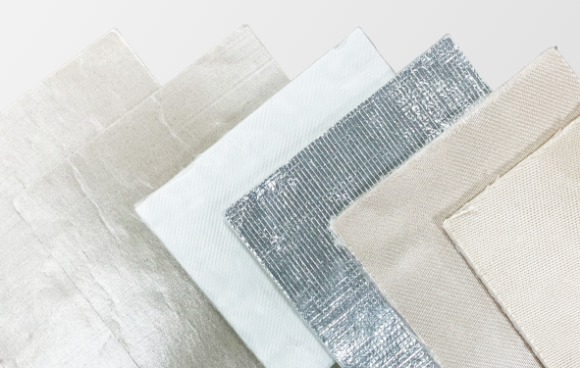
We supply two substrate families, selected by the service temperature of your finished product:
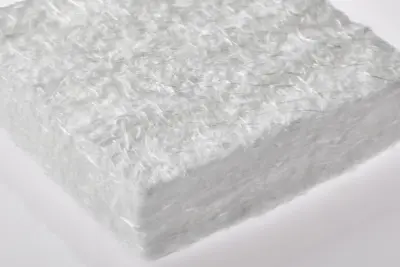
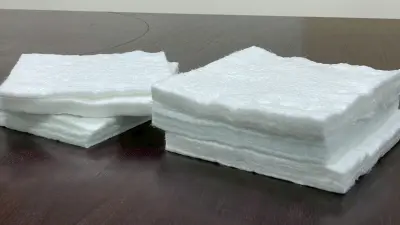
1. All-inorganic needle mat (600°C–1000°C) covers the full ladder from E-glass through ECR, OS glass and S-glass to high silica. This is the family for aerogel blankets going into industrial piping, petrochemical service, CUI protection and high-temperature equipment, where genuine heat resistance is the requirement.
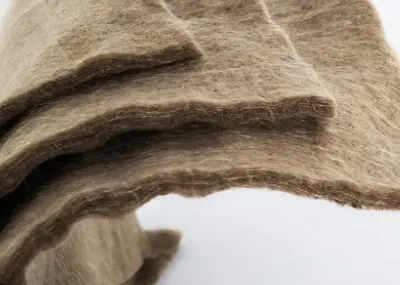
2. Fiber-blend needled substrate (-30°C to approx. +250°C) combines glass fiber with man-made fiber,most commonly glass/PET. Adding man-made fiber gives up the high-temperature ceiling, but buys back three things that lower-temperature product lines genuinely need: a softer hand and better drape, so the finished blanket conforms to curves and can be rolled or folded; higher wet tear strength, so the impregnated web is less likely to fail on the line; and noticeably lower fiber shed and dust, which helps both finished appearance and the working environment. Unit cost is also clearly below all-inorganic. This family suits building insulation, cold chain, moderate-temperature EV battery module pads, apparel and footwear, and any aerogel product where softness, appearance and cost matter more than heat resistance. Blend ratio is adjustable to the softness and strength you want, and where more temperature capability is needed than PET allows, it can be other substituted.
Two requirements are non-negotiable, and both families meet them. First, no binder at all, fibers are held mechanically by needling. Organic binder interferes with sol-gel chemistry and leaves residue and outgassing behind in post-treatment; in aerogel production that is not a matter of better or worse, it is a matter of usable or not. Second, wet strength. Once saturated with sol the mat's weight multiplies and its strength drops sharply, and it still has to travel through conveying, into and out of the autoclave, and through drying. Insufficient needling tears at that stage, and a lost autoclave batch costs far more than the material in it. Our needling parameters are set against that wet load, not against dry handling.
Founded in Taiwan in 1975, producing in Tainan and Qidong, Jiangsu, ISO 9001 and IATF 16949 certified. Thickness, density, width, roll length and blend ratio are all specified to your impregnation line and autoclave. Send us your process parameters and target finished specification, and we will define the substrate together. Request a Quote.
Core Product Features
- 100% Binder free
- Uniform thickness and weight per unit area, consistent silica sol absorption
- Excellent low thermal conductivity
- Inorganic fibers and blended fiber substrates for options
- Good tensile strength
Main applications
- All-Inorganic Substrate (600–1000°C)
- Aerogel blanket for industrial pipe and vessel insulation
- Aerogel blanket for petrochemical piping and CUI protection
- Aerogel insulation parts for high-temperature equipment and furnace surrounds
- Marine and rail transport high-temperature zone aerogel insulation
- Aerogel sheet for automotive exhaust system surrounds - Fiber-Blend Substrate (-30°C to approx. +250°C)
- Aerogel blanket for building wall and roof energy saving
- Cold chain logistics and refrigeration equipment insulation
- Moderate-temperature EV battery module thermal pads
- Flexible aerogel material for apparel, footwear and outdoor equipment
- Aerogel products required to roll, fold or conform to curved surfaces
- Consumer-facing applications sensitive to appearance and fiber shed
- Thermal conductivity: 0.032 W/m·K (mean temp. at 24℃, under 100% fiberglass needled felt 10mm x 115kg/m³)
- Thickness: 2mm~25mm
- Width: Max. 3.3M
- Length: Max. 150M
- Density: 40~200 kg/m³
- Color: White
- Flammability: Non-flammable
(√ Specific specifications can be provided upon request)
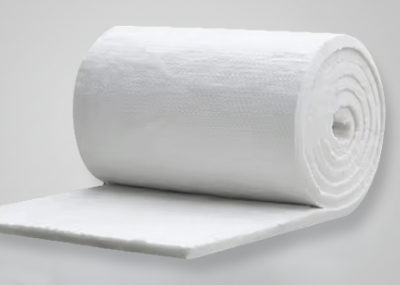
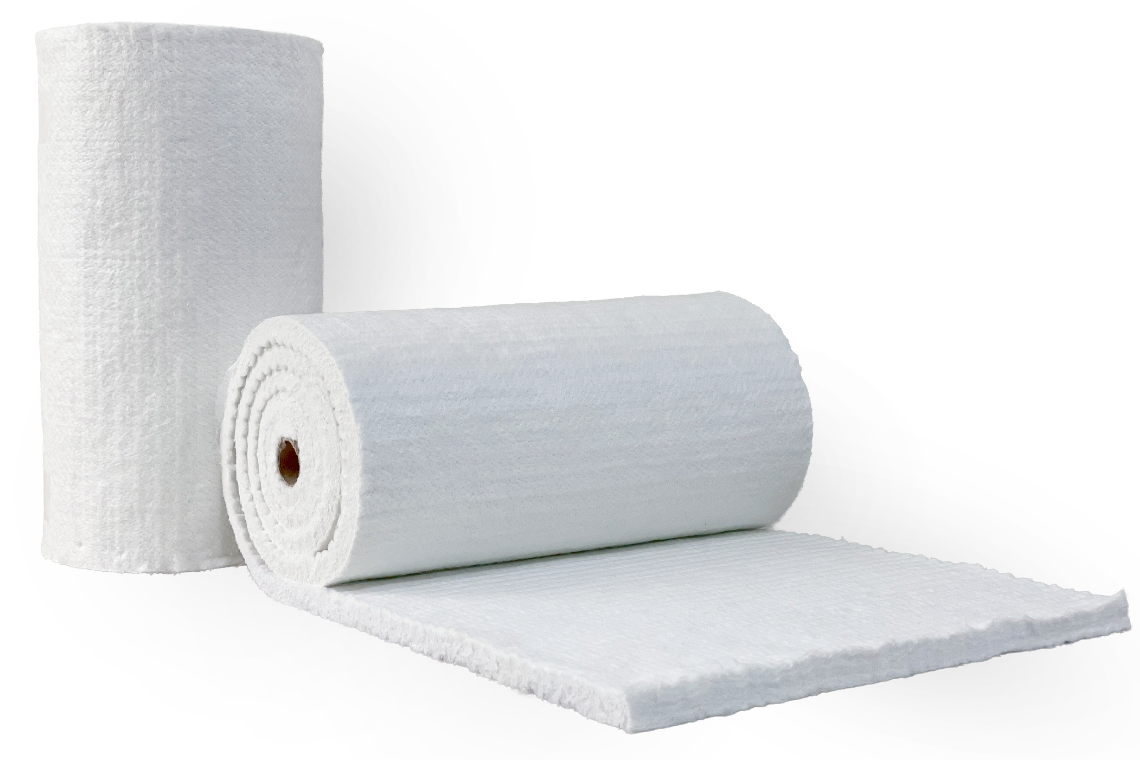
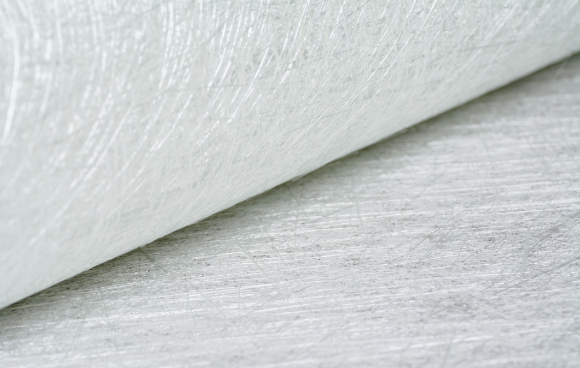
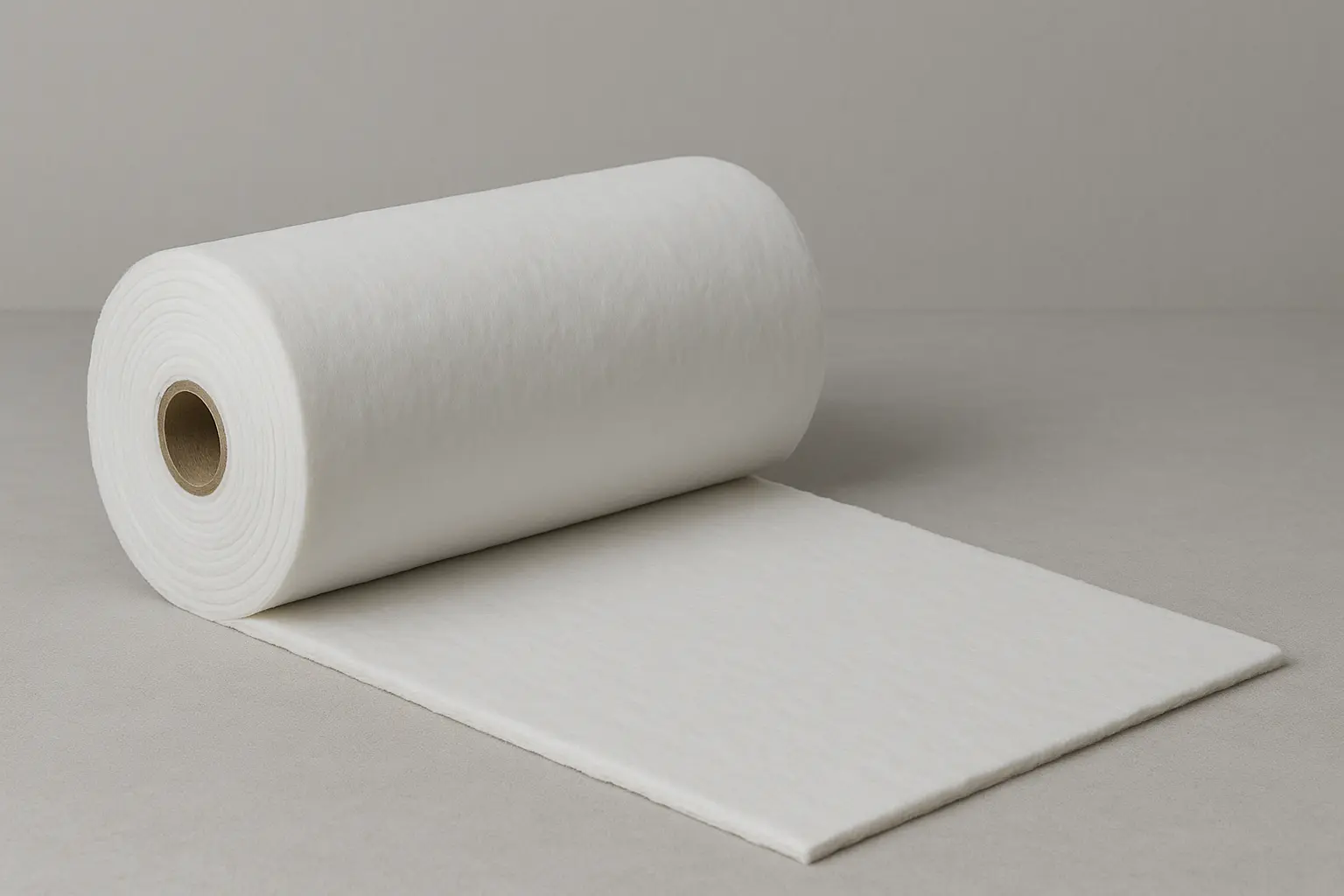
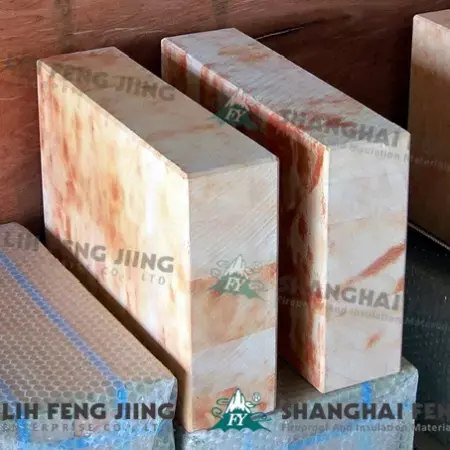
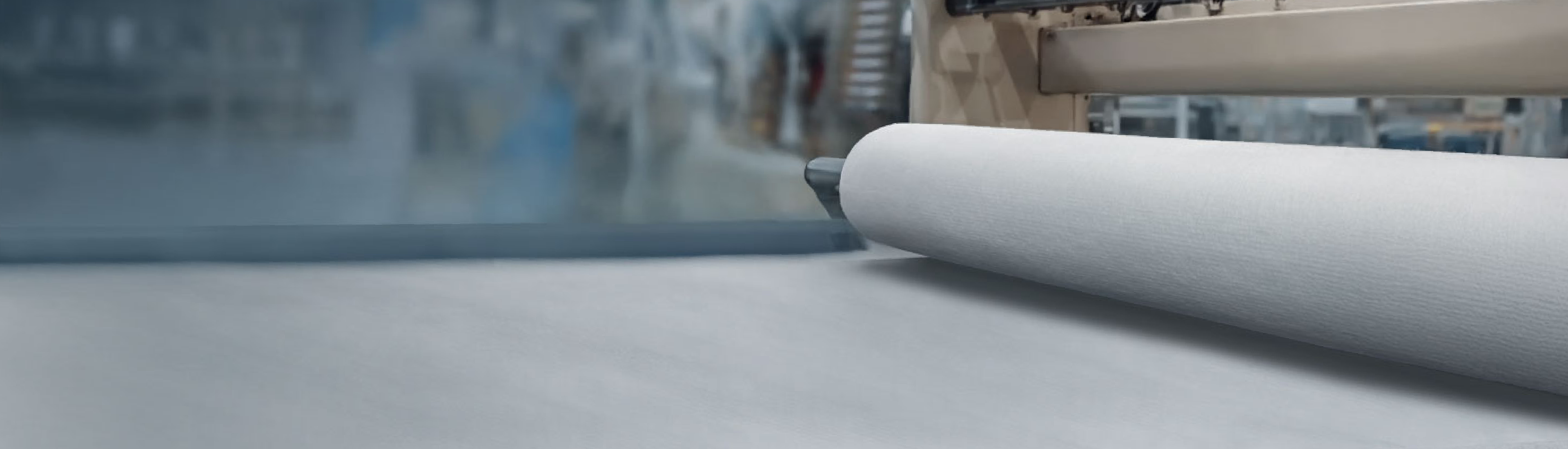
- Aerogel substrate roll
1. What does substrate uniformity actually affect in the finished aerogel blanket?
Three things, all of which land directly on cost or specification. First, sol consumption: how much silica sol a spot absorbs is governed by the void volume the substrate left there, so a mat with density variation consumes an unpredictable quantity of sol and your cost per square metre never converges. Second, finished thickness: variation in substrate thickness carries through unchanged, and the only ways to absorb it are trimming, downgrading or widening tolerance, all of which are yield loss. Third, the spread on thermal conductivity: aerogel content varies with position, so finished λ becomes a range, and when you publish a conservative figure you are paying for process variation with your specification. LFJ holds both thickness and areal weight variation within limilit tolerance precisely so these three become predictable numbers.
2. When should I choose a fiber-blend substrate rather than all-inorganic?
Service temperature decides first; softness and cost fine-tune from there. Above roughly 250°C, all-inorganic is the only option, man-made fibers soften and decompose at that temperature and there is nothing to discuss. Between ambient and 250°C, a blend is usually the better choice. Glass/PET is noticeably softer with better drape, so the finished blanket rolls, folds and conforms to curves. Wet tear strength is higher, so web breakage after impregnation drops. Fiber shed and dust are lower, which helps both consumer-facing appearance and shop-floor conditions. Building insulation, cold chain, moderate-temperature battery module pads, apparel and footwear all sit in this band.